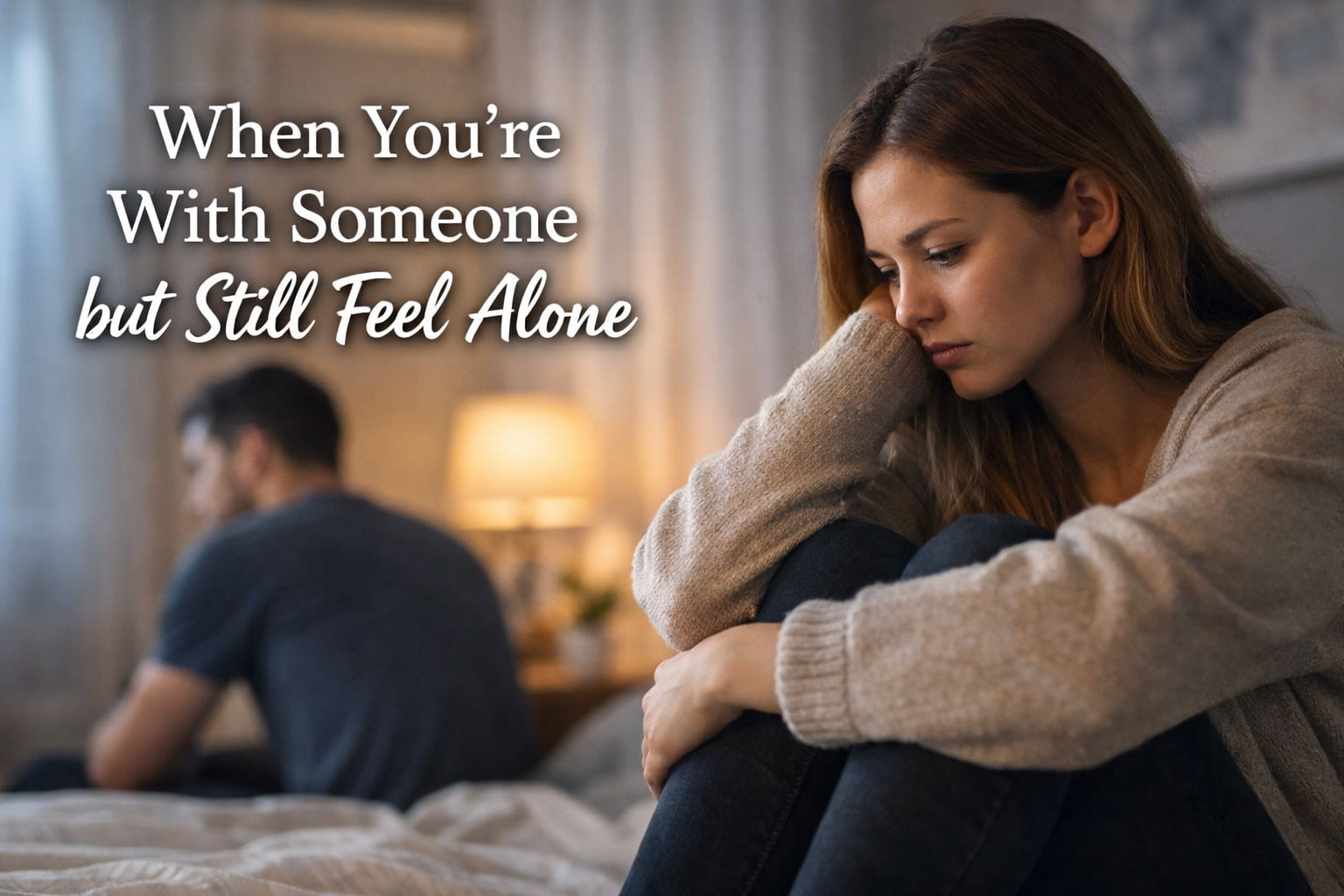
You can be in the same room. You can talk every day. You can even share routines and responsibilities.
And still feel alone.
This kind of loneliness is hard to explain because nothing is technically wrong. There’s no big fight. No clear reason. Just a quiet feeling that something is missing — even though someone is right there.
If this feels familiar, you’re not imagining it. And you’re not asking for too much.
Why does this kind of loneliness feel confusing
When people think of loneliness, they imagine isolation. Being single. Being left out.
But feeling alone with someone is different. It creates a strange inner conflict:
- “I shouldn’t feel this way.”
- “Maybe I’m being ungrateful.”
- “Others would be happy in this situation.”
Instead of listening to their feelings, many people silence them.
But emotional loneliness doesn’t disappear when ignored. It usually grows quieter — and heavier.
Being together is not the same as feeling connected
You can spend time with someone without actually feeling emotionally close.
Connection isn’t built only through time spent, daily conversations, or physical presence.
It’s built through:
- Feeling understood
- Feeling emotionally responded to
- Feeling like your inner world matters
When those things slowly fade, the relationship can continue on autopilot while emotional closeness slips away.
Common reasons you feel alone even when you’re together
1. You talk, but don’t really share anymore
Conversations become practical — work, schedules, responsibilities.
There’s nothing wrong with that, until emotional sharing disappears completely.
When you stop talking about what you feel, loneliness quietly takes its place.
2. You don’t feel emotionally met
You might open up, but your feelings are met with silence, distraction, quick solutions, or dismissal.
Over time, you learn that being vulnerable doesn’t bring closeness — it brings distance. So you stop trying.
3. You’ve adapted too much
Sometimes loneliness comes from constantly adjusting yourself to keep things smooth.
You become more understanding, more patient, and quieter about your needs.
But relationships where only one person adapts slowly create emotional imbalance — and that imbalance feels lonely.
4. You’re physically close but emotionally elsewhere
Watching TV together. Eating together. Sleeping next to each other.
But emotionally, both of you are somewhere else.
Without emotional presence, physical closeness can start to feel empty instead of comforting.
5. You don’t feel chosen in small moments
Loneliness often isn’t about grand gestures.
It’s about small things — being listened to fully, feeling prioritized, feeling like your presence matters.
When those moments are missing, togetherness can feel hollow.
Why this loneliness hurts more than being alone
Being alone gives you clarity.
Being with someone but feeling alone creates doubt.
You may start questioning your expectations, your needs, and your worth.
That’s what makes this kind of loneliness so painful — it turns inward.
But needing emotional connection is not a flaw. It’s part of being human.
What this feeling is trying to tell you
Loneliness is not always a sign to leave. Sometimes it’s a sign to look closer.
It may be pointing to unspoken needs, emotional distance that hasn’t been acknowledged, or a desire for deeper connection.
Ignoring it doesn’t protect the relationship. Understanding it might.
What helps without turning it into blame
1. Acknowledge the feeling honestly
Even if you don’t say it out loud yet, admit it to yourself.
“I feel alone even though I’m not alone.”
That clarity matters.
2. Notice what you miss, not who’s wrong
Instead of asking what’s wrong with them, ask what you miss feeling.
This keeps the focus on understanding, not fault.
3. Share gently, not defensively
If you talk about it, speak from experience.
- “I’ve been feeling a bit disconnected.”
- “I miss feeling emotionally close to you.”
Connection grows in safety, not accusation.
4. Pay attention to emotional response
You’re not looking for perfection — just presence.
Notice whether your feelings are met with curiosity, care, and willingness to understand.
That response matters.
5. Don’t disappear emotionally to keep things easy
Silencing yourself may avoid discomfort, but it often deepens loneliness.
You deserve connection, not just harmony.
A quiet truth many people learn late
You can be loyal, patient, and loving — and still feel alone.
That doesn’t make you demanding. It makes you emotionally aware.
Loneliness isn’t a weakness. It’s information.
Listening to it with honesty and care is one of the most respectful things you can do — for yourself and for the relationship.